

ADHD and Emotional Dysregulation in Adults
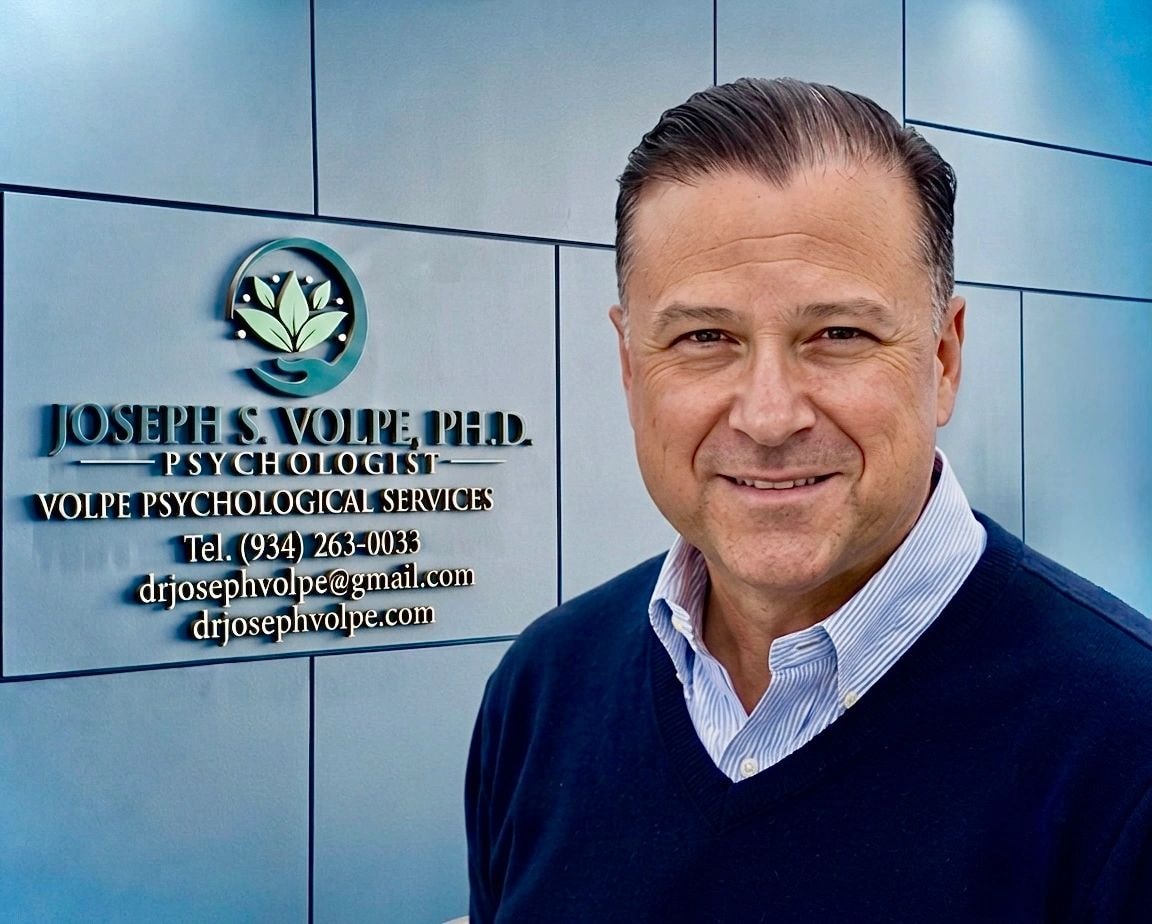
Joseph S. Volpe, Ph.D., Clinical Psychologist
Most people think of ADHD as a problem with attention. And it is — but that description misses a significant part of the picture for many adults.
Alongside the inattention, impulsivity, and executive function difficulties, a large proportion of adults with ADHD experience something that is harder to name but often more disruptive to daily life: emotions that arrive with unusual intensity, shift rapidly, and feel difficult or impossible to regulate.
A minor criticism lands like a devastating attack. A small frustration escalates into rage within seconds. Excitement becomes all-consuming. Disappointment feels catastrophic. And then, often, the emotion passes — leaving the person wondering what just happened and dealing with the aftermath.
This is emotional dysregulation, and it is an important and often underrecognized feature associated with adult ADHD.
Why ADHD Affects Emotional Regulation
Emotional regulation is closely related to executive functioning and broader self-regulation. It involves the ability to notice an emotional response, modulate its intensity, and choose how to express it — rather than simply reacting to it automatically. Processes such as inhibition, working memory, self-monitoring, and cognitive flexibility all play a role in how well a person can regulate emotional experience.
Because ADHD affects executive functioning broadly, it can also affect this capacity. Research suggests that differences in neural systems involved in attention, inhibition, emotional processing, and cognitive control contribute to the emotional reactivity many adults with ADHD describe. The result is that emotional reactions that most people can modulate — slow down, soften, redirect — arrive at full intensity and are harder to interrupt.
This is not a character flaw. It is a neurological difference in how the brain processes and regulates emotional experience.
Rejection Sensitive Dysphoria
For some adults with ADHD, rejection sensitivity can be a particularly significant experience. The term "rejection sensitive dysphoria" (RSD) is commonly used in clinical and popular discussion to describe an intense, often rapid emotional response to perceived criticism, rejection, or failure — but it is not a formal DSM diagnosis, and its prevalence and diagnostic boundaries are not firmly established.
Adults who describe this experience report a sudden, overwhelming wave of emotional pain triggered by a perceived slight — a critical comment, a social exclusion, a sense of having disappointed someone. The response can feel disproportionate to the actual event and may be physically distressing. It typically passes, but while it is happening it can be destabilizing.
Rejection sensitivity is worth taking seriously as a clinical concern, even as the research on its prevalence and mechanisms continues to develop. It is also worth noting that intense emotional responses to perceived rejection can occur in other conditions — including anxiety, depression, trauma, and personality disorders — making careful differential assessment important.
How Emotional Dysregulation Affects Daily Life
The impact of emotional dysregulation in ADHD extends across every domain of life.
Relationships. Intense emotional reactions — particularly anger and hurt — can damage relationships when they are expressed without modulation. Partners, family members, and colleagues may experience the person with ADHD as volatile, unpredictable, or difficult to be around. The person with ADHD, meanwhile, may feel misunderstood and ashamed of reactions they did not choose and cannot easily control.
Work. Emotional dysregulation can make professional environments difficult to navigate. Criticism from a supervisor, conflict with a colleague, or a perceived slight in a meeting can trigger a response that is hard to contain and may have professional consequences.
Self-esteem. Adults with ADHD who experience frequent emotional dysregulation often develop a deeply negative self-concept — a sense of being "too much," broken, or fundamentally different from other people. Years of being told to "calm down," "stop overreacting," or "get it together" leave marks.
Avoidance. Some adults with ADHD begin to avoid situations that might trigger intense emotional responses — social situations, feedback, new challenges — in an effort to protect themselves from the dysregulation. This avoidance can significantly narrow their lives.
What Helps
Accurate diagnosis
The first step is recognizing that emotional dysregulation is part of the ADHD presentation, not a separate problem or a character defect. A comprehensive ADHD evaluation that includes assessment of emotional regulation can provide this clarity.
Medication
Medication used to treat ADHD may also improve aspects of emotional regulation for some adults, although response varies and emotional difficulties may require additional treatment strategies. Stimulant medications are the primary pharmacological treatment for ADHD; some adults also report improvement in emotional reactivity with non-stimulant options. Medication alone does not reliably resolve emotional dysregulation, and many adults benefit from combining pharmacological and psychotherapeutic approaches.
Cognitive Behavioral Therapy adapted for ADHD
CBT can help adults with ADHD develop specific skills for recognizing emotional escalation early, creating space between the trigger and the response, and challenging the catastrophic interpretations that often accompany intense emotional reactions. It can also address the shame and negative self-concept that emotional dysregulation frequently produces.
Mindfulness-based approaches
Mindfulness practices — particularly those focused on observing emotional states without immediately reacting to them — can build the capacity for emotional regulation over time. For adults with ADHD, brief and structured mindfulness practices tend to be more accessible than longer, open-ended ones.
Environmental and relational strategies
Understanding the pattern allows for practical adjustments: stepping away from a situation before responding, communicating to trusted people about what is happening, building in recovery time after emotionally intense experiences.
You Are Not "Too Much"
If you have spent years being told that your emotional responses are excessive, inappropriate, or exhausting — and if you have internalized that message — it is worth reconsidering it in light of what is actually happening neurologically.
Emotional dysregulation in ADHD is real, it is common, and it is treatable. It is not evidence that you are a difficult person. It reflects difficulties with emotional self-regulation that can occur alongside ADHD — and with appropriate treatment and strategies, those difficulties can improve.
At Volpe Psychological Services, P.C., we provide comprehensive ADHD evaluation and treatment for adults on Long Island and throughout New York State. Most services are provided through secure telehealth throughout New York State, with in-person appointments available. If emotional dysregulation is affecting your life, we can help you understand it and build real skills for managing it.
Ready to take the next step?
Dr. Volpe is accepting new clients via telehealth throughout New York State.
Schedule a ConsultationAbout Volpe Psychological Services, P.C.
Joseph S. Volpe, Ph.D. is a licensed Clinical Psychologist and School Psychologist with over 30 years of experience specializing in ADHD, learning disabilities, autism spectrum disorder, anxiety, and traumatic stress. He is an ADHD Certified Clinical Services Provider (ADHD-CCSP), a Board Certified Telehealth Professional, and a Certified Clinical Trauma Professional (CCTP). Dr. Volpe holds an Adjunct Professor appointment in the Department of Counseling and Mental Health Professions at Hofstra University's School of Health Sciences and is co-author of two nationally recognized crisis response guides used in schools and universities.
Dr. Volpe is the Executive Director of Volpe Psychological Services, P.C., which provides comprehensive psychoeducational evaluations and telehealth psychology services for adolescents and adults throughout New York State — including ADHD evaluations, learning disability assessments, and treatment for anxiety, depression, and traumatic stress. Most evaluation components are completed through secure telehealth. When a measure cannot be appropriately administered remotely, Dr. Volpe will discuss suitable referral or coordination options.